

De quoi parle-t-on lorsqu’on parle de l’état des réseaux d’eau potable ? Enquête sur les données de la gestion patrimoniale
Les réseaux d’eau potable, infrastructures invisibles mais vitales, posent un défi croissant : comment évaluer leur état pour limiter les fuites et optimiser leur gestion ? Face à cette question, les gestionnaires s’appuient sur des données et outils de gestion patrimoniale pour guider leurs décisions d’investissement. Mais que révèlent vraiment ces données ? À partir d'une enquête auprès des professionnels et d'une analyse de leurs pratiques, cet article explore les limites et les enjeux de l'utilisation de ces données, au-delà de la simple quête d’optimisation technique.
Introduction
Que sait-on des réseaux de distribution d’eau potable et de leurs kilomètres de canalisations ? Cette question apparaît de prime abord peu problématique, voire peu intéressante, aujourd’hui en France métropolitaine tant l’expérience quotidienne de l’usage de l’eau nous semble acquise. Toutefois, certains chercheurs argumentent que le modèle de distribution tel qu’il existe aujourd’hui fait face au « défi de sa durabilité » (Barbier et al., 2015). Après un problème de desserte généralisée en eau au centre des préoccupations au vingtième siècle, se présente aujourd’hui un problème de « sécurité hydrique » (Barbier et al., 2015, p. 130). Si des inégalités d’accès persistent, cette idée de sécurité hydrique permet surtout de souligner les menaces sur la qualité et la quantité de la ressource d’une part, et sur l’état des réseaux d’autre part. Mais concentré sur des pistes renvoyant aux relations entre les différents niveaux d’action publique, le cadrage présenté dans ces travaux laisse finalement peu de place au problème spécifique de l’état des réseaux et de sa durabilité. Il en ressort cependant un horizon déjà atteignable, « la gestion du patrimoine grâce à l’accès à des méthodes de pilotage sophistiquées » (Barbier et al., 2015, p. 136), mais obstrué par une méconnaissance de ces réseaux (des matériaux qui les composent, de leur date de pose ou encore des défaillances passées qui les ont éprouvés).
Compter, quantifier, calculer, sont autant d’opérations au cœur du fonctionnement de l’action publique qui font l’objet d’une littérature riche en sciences sociales. Ces dernières années, une sociologie de la quantification s’est en effet consolidée (Mennicken et Espeland, 2019), s’appuyant précisément sur des travaux pionniers sur la statistique comme outil de gouvernement (Desrosières, 2008). Cette littérature a mis en avant le travail et les ressources importantes nécessaires pour produire des chiffres et des catégories. Ouvrant la boîte noire du travail invisible de classification, des auteurs comme Bowker et Star (1999) nous invitent alors à regarder avec plus d’attention les processus par lesquels le monde est décrit dans des bases de données ou des formulaires. Des travaux concernant les services d’eau potable existent déjà dans cette veine, s’intéressant par exemple à la place d’indicateurs de performance dans la gestion des services (Canneva et Guérin-Schneider, 2011; Guérin-Schneider et Nakhla, 2003), mais ne donnent encore que peu de visibilité sur les préoccupations des gestionnaires quant à leurs connaissances. Que nous apprend alors une enquête auprès de celles et ceux pour qui le réseau n’est pas cet objet invisible que tout un chacun prend pour acquis en ouvrant son robinet ? Que connaissent-ils des réseaux dont ils ont la charge, que cherchent-ils à décrire et de quoi sont faites ces dites méthodes de pilotages sophistiquées ?
Je propose ici de répondre à ces questions et d’explorer comment les réponses permettraient d’approcher différemment la problématique de la durabilité des services d’eau potable. Pour cela, je me base sur une enquête de dix-huit mois menée dans le cadre d’une thèse CIFRE
Connaître pour mieux gérer : connaître quoi, pour gérer quoi ?
La connaissance dans la gestion patrimoniale
À propos des méthodes de pilotage sophistiquées, l’enquête menée pointe rapidement vers la gestion patrimoniale et ses outils statistiques d’aide à la décision, tels que présentés dans une série de guides techniques publiés dans les années 2010, et repris en partie dans le projet FDR. Mais de quoi parle-t-on ? La gestion patrimoniale des réseaux d’eau potable désigne une diversité de pratiques orientées vers une exploitation plus préventive et planifiée des réseaux. Plus concrètement ces pratiques consistent en : « l’inventaire des infrastructures, leur suivi, inspection et maintenance, l’analyse de leur état et de leur performance, leur renforcement, rénovation, et la définition de politiques technico-financières de long terme » [traduction de l’auteur] (Le Gat et al., 2025, p. 2). Les pratiques de gestion patrimoniale définies ainsi n’avaient rien d’évident avant les années 1990, avant que les travaux scientifiques et les initiatives locales qui la fondent se multiplient. Parmi ceux-là je souligne les travaux menés au Cemagref à Bordeaux (aujourd’hui intégré à INRAE) (Renaud et al., 2012) ainsi que des inventaires de réseaux lancés dès 1996 et qui aboutissent en 2002 par une étude du laboratoire GEOPHEN
C’est ainsi d’abord un patrimoine qu’il s’agissait d’établir. Reprenant la formule de Solé-Pomies (2023) étudiant les routes françaises, « faire de l’infrastructure publique un patrimoine, c’est précisément faire de son entretien un problème public » (Solé-Pomies, 2023, p. 203). On retrouve ainsi ce passage au statut de patrimoine des réseaux d’eau potable de manière emblématique dans les années 1990, faisant également de l’entretien et du renouvellement des canalisations un problème public par le biais d’inventaires et d’études statistiques. En 1996, le département de la Manche lance un premier inventaire de son réseau de canalisations en partenariat avec l’Association des collectivités gestionnaires de l'eau potable et de l'assainissement, les Canalisateurs de France
« L'opération "Patrimoine" peut être envisagée comme une opération comportant un important volet de communication, de prise de conscience, à l'intention des élus. Les enquêtes ont montré partout, que le patrimoine était trop souvent méconnu des collectivités : aucune donnée sur les matériaux, les années de pose, voire dans les pires situations, absence de plans. »
(Cador, 2002, p. 5).
Puis, centrale dans la dimension gestionnaire qui commence à se constituer ici, cette connaissance du patrimoine se double d’un « essai de chiffrage des grandes masses financières » pour dessiner les « grandes lignes d’une politique de programmation » (Cador, 2002, p. 6). Surtout, la conclusion de cette synthèse d’enquête patrimoniale ouvre sur une montée en capacité des services d’eau dans la maîtrise de ce patrimoine et de son maintien : « Il est souhaitable que la politique de renouvellement imposée par les travaux de voirie cède la place à d'autres démarches » (Cador, 2002, p. 182). Ce rapport d’autonomisation vis-à-vis de la programmation de voirie est déterminant dans la construction de la gestion patrimoniale, entendue comme démarche pour compter pour mieux faire compter les réseaux d’eau et leur logique propre d’exploitation (Denis et Florentin, 2022). Se dessine ce qui doit être compté et cartographié : les plans des réseaux, les matériaux des canalisations, leurs années de pose, et la valeur financière de ce patrimoine qu’il s’agit de ne pas laisser se détériorer.
Gérer les fuites et le renouvellement
Comme le retracent Canneva et Guérin-Schneider (2011), la performance des services d’eau était d’abord jugée sur la base des raccordements effectués dans l’après-Seconde Guerre mondiale, avant de connaître dans les années 1980-1990 une pression sur les prix et une crise de confiance, poussant à revoir l’approche pour évaluer ces services. Les auteurs reviennent sur l’élaboration des indicateurs de performance face à ces critiques – qui seront adoptés d’abord dans le décret du 2 mai 2007 dans le cadre des rapports annuels sur le prix et la qualité du service d’eau et d’assainissement (RPQS) – et y soulignent qu’ « un niveau de fuites limité traduit un réseau en bon état et performant, et donc un patrimoine qui garde sa valeur. » (Canneva et Guérin-Schneider, 2011, p. 219). Le décret du 27 janvier 2012
Un guide publié par l’Onema
Les indicateurs arrêtés ces dernières années participent à aller au-delà d’un qualificatif de bon ou mauvais état des réseaux, favorisant une entrée par l’évaluation d’indicateurs chiffrés mis en relation avec ces descriptifs de réseaux. Cela souligne aussi le rôle des groupes de travail mêlant expertises techniques et représentants d’intérêts publics ou privés qui ont contribué à produire ces indicateurs et les guides techniques pour accompagner les services. Je poursuis ici l’attention à ce travail entre experts scientifiques et praticiens autour de la gestion patrimoniale comme partie « d’une démarche de « conventionnement » (Desrosières, 2008), autour du concept de service d’eau bien géré » (Canneva et Guérin-Schneider, 2011, p. 214). Un service bien géré apparaît comme un service avec une gestion patrimoniale structurée, qui serait seule à même de répondre aux exigences des indicateurs ; la gestion patrimoniale se matérialisant in fine par une programmation qui organise un partage entre là où il faut investir en renouvellement et là où un entretien de l’existant peut se poursuivre, afin de limiter les fuites ; cette programmation s’appuyant sur une connaissance désormais balisée et orientée à cet effet.
Des faisceaux de problématiques derrière les bases de données
L’état du patrimoine de réseaux d’eau potable se voit donc lié aux phénomènes de fuites et traité largement à l’aune du besoin de renouvellement. Dans la gestion patrimoniale, la connaissance des réseaux doit alors se transformer en données calculables afin d’orienter ce renouvellement préventif de canalisations . Dans le cadre du projet FDR, des collectivités ont travaillé à définir un socle commun minimal de données afin précisément de calculer ce « besoin en renouvellement » (termes du projet FDR). On retrouve, dans ce socle commun des éléments de connaissance qui se sont imposés dans les années 1990 divisés en deux fichiers : l’un qui décrit les canalisations et l’autre qui décrit les défaillances observées.
On retrouve ces deux types de fichiers dès 1994 dans la thèse de Patrick Eisenbeis menée au Cemagref. Réalisée sur la base d’historiques d’opérations de maintenance récupérées auprès de services locaux d’eau potable, il proposait un modèle statistique estimant le nombre de casses que connaîtront les canalisations dans le futur, partant de l’observation que ce nombre serait indicatif du besoin en renouvellement desdites canalisations. Pour Eisenbeis, comme pour le groupe de travail FDR, ce modèle est indicatif de l’état du réseau en définissant des « conduites à risques » et des « zones prioritaires à surveiller » (Eisenbeis, 1994, p. 144). La politique de renouvellement devant ensuite intégrer plus d’éléments, comme les contraintes budgétaires ou l’opportunité de travaux conjoints avec les services de voirie. En 2009, les travaux d’Yves Le Gat prolongent cette approche centrée sur la prédiction de défaillances en proposant un nouveau modèle statistique (appelé LEYP, pour Linear Extended Yule Process). Celui-ci prend en compte de manière plus dynamique le vieillissement des canalisations et les défaillances passées (Le Gat, 2009).
Si ces chercheurs évoquent la diversité des facteurs amenant à des défaillances (caractéristiques des canalisations, pression hydraulique, type de sol, qualité de la pose, variation de température, etc.), les développements parallèles d’outils logiciels qu’ils mènent pour des exploitants, notamment le logiciel « Casses », les amènent à simplifier :
« Seulement certaines données sont nécessaires. Quatre variables dans le fichier sur les canalisations : l’identifiant de la canalisation, la date de pose, la longueur et le matériau ; et deux pour le fichier des défaillances : l’identifiant de la canalisation et la date de la défaillance. »
[ma traduction] (Renaud et al., 2012, p. 6).
Ces données deviennent alors une description minimale recherchée du patrimoine accompagnant une pratique d’exploitation focalisée sur la priorisation du renouvellement sur la base des défaillances. C’est ce que nous retrouvons alors dans le cadre du projet FDR, dont une des conclusions était d’appeler les collectivités à maintenir une base de données géoréférencées relatives aux défaillances.
Dans l’épaisseur des problématiques posées par la date de pose ou le matériau
Dans la gestion patrimoniale, la connaissance des réseaux et de leur milieu d’exploitation est donc largement orientée vers la maîtrise des fuites. Si cette connaissance est riche et complexe, elle se voit nécessairement réduite dans un processus de décision qui pose la question « où renouveler en priorité ? » La production et le traitement des données pour aider à cette décision pointent toutefois également vers une multitude de questions pour l’exploitation de réseaux, qui déborde la seule question du renouvellement, à commencer par la prise en compte de l’âge et des matériaux.
Communément mis en avant comme facteur écrasant de compréhension des fuites, l’âge des réseaux n’a pourtant rien d’évident pour les gestionnaires de réseaux. Comme on le voit par exemple en figure 1, les niveaux de connaissance des dates de pose des cinq collectivités participantes au projet FDR (anonymisées, en colonne) sont très différents. Et, outre la complétude, les formats (date précise, fourchette plus ou moins large, etc.) et la source (mémoire, estimation statistique ou corrélation avec matériau, relevé de plan, etc.)
Le taux de complétude en nombre indique le nombre de canalisations dont la date de pose est connue sur le total du nombre de canalisations enregistrées. Le taux de complétude en linéaire fait référence à la part de linéaire en kilomètre dont la date est connue. Les deux étant utilisés pour compenser des découpages différents de tronçons ou des tailles de réseaux en km de linéaires trop différents, et toujours permettre la comparaison. Le nom des cinq collectivités (en colonne) est anonymisé pour diffusion.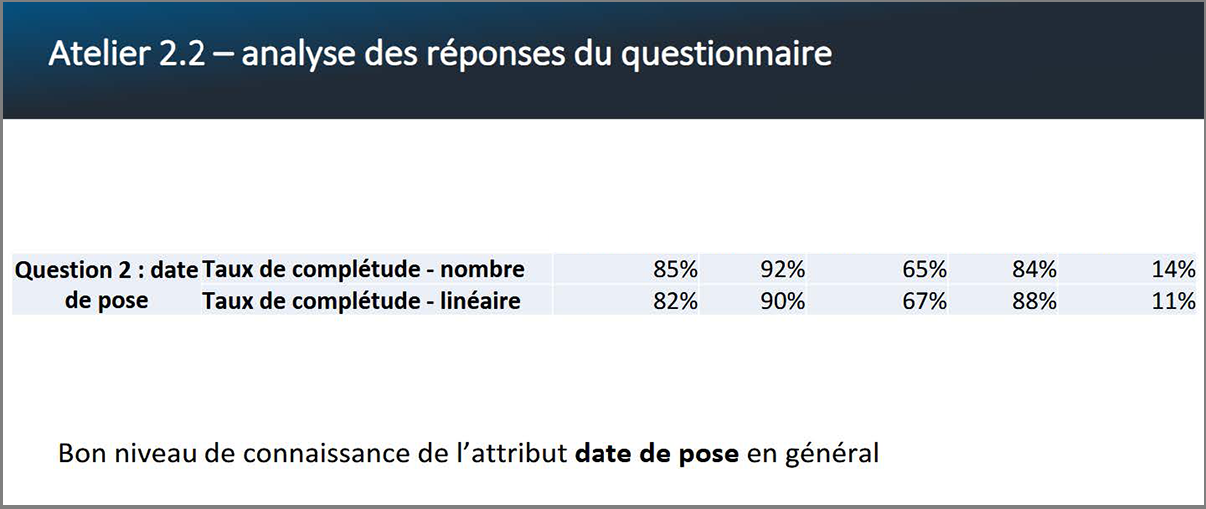
Figure 1. Document issu d’un atelier dans le cadre du projet « France Data Réseau ».
Dans le traitement de cette donnée même, la place de la date de pose et l’idée d’un âge des canalisations font problème. Dans un article de 2011, Eddy Renaud, Bernard Bremond et Yves Le Gat recommandent la notion de « durée de maintien en service » (Renaud et al., 2011)en remplacement de celle de durée de vie moyenne. Le cœur de leur propos est que pour les canalisations, il n’est pas possible « de déterminer objectivement la fin de vie » (Renaud et al., 2011, p. 2), car elle est un choix, une décision, dans un cadre d’exploitation où la réparation, la réhabilitation ou le renouvellement sont possibles. Revenant également sur les travaux déjà cités de Cador (2002), ces mêmes auteurs critiquent l’approche consistant à accoler des durées de vie moyennes à des types de matériaux, démontrant pour leur part, via une enquête, la grande variabilité des durées de vie moyennes utilisées dans les départements français, qui ne s’embarrassent parfois pas de distinguer des différences selon les matériaux ou autres conditions d’exploitation. Cet argumentaire en faveur de la durée de maintien en service s’inscrit dans un recadrage plus large de la problématique du vieillissement dans la compréhension de la fragilité des réseaux, et du recours aux données de date de pose dans les décisions de renouvellement :
« Le débat public a été pollué par l’âge [et des messages disant :]’il faut changer les vieux tuyaux.’ » […] On ne change pas un tuyau parce qu’il est vieux […] on change un tuyau parce qu’il ne rend plus le service qu’on attend de lui. »
(Entretien avec un contributeur au logiciel Casses, 26/04/2024).
Ce discours entre en opposition avec celui des Canalisateurs qui s’attachent à définir l’âge comme problématique en soi, justifiant qu’il soit une variable prépondérante dans les décisions de renouvellement :
« Le taux de renouvellement annuel des réseaux d’eau potable, par exemple, est de 0,66 %, soit, en moyenne, un renouvellement tous les 150 ans, alors que la durée de vie d’une canalisation [en gras dans le texte original] est bien inférieure. »
La date de pose n’est donc pas qu’une donnée à produire et à traiter, elle est aussi le support de débats et de manières différentes de problématiser le vieillissement, particulièrement visible par son poids dans les politiques patrimoniales. Il en va de même pour d’autres données, comme celles relatives aux matériaux, qui sont aussi décrits avec des variabilités de complétude, de formats et de sources. Selon les exploitations, certains matériaux peuvent être particulièrement ciblés, à la fois dans la constitution d’une connaissance sur leur représentation dans le réseau ou par leur tendance accidentogène par exemple. Certains matériaux, comme l’amiante par exemple, peuvent aussi orienter grandement les choix en imposant des renouvellements prioritaires. S’intéresser aux matériaux, c’est aussi voir en eux une épaisseur dans l’exploitation, au-delà d’une pondération dans le risque de fuite :
« C’est important de dissocier ces fontes [grises et ductiles] parce qu'elles ne vieillissent pas de la même façon. Et puis vous n'avez pas le même risque. Une fonte grise, le risque, c'est qu'elle vous pète à la figure et si vous êtes sur une voirie structurante, quand ça casse, ça fait vilain.
[…]
On ne met pas que de la fonte, on met aussi du PE. C'est polyéthylène. Moi, je mets un bémol sur ce matériau-là dans le sens où, même s'il est très bien, parce qu'une fois que normalement il est posé, que c'est bien soudé, vous n'avez pas de fuite. Le problème c’est qu'en fait, le jour où il y a des fuites on n’arrive pas à les trouver. Parce qu’on fait des recherches de fuite à l'écoute et que sur le PE, on n'entend rien du tout. »
(Entretien avec une responsable étude et travaux d’une collectivité, 01/06/2023).
Ces retours soulignent que la donnée « matériau », plus qu’une simple variable de risque dans un modèle d’aide à la décision, ouvre sur toute une gamme de problématiques que les exploitants cherchent à saisir et qui ne se trouvent pas forcément d’espace d’expression dans une version restrictive de la gestion patrimoniale focalisée sur le taux de renouvellement. Le matériau n’est pas ici seulement renvoyé à une fiabilité ou une durée de vie plus ou moins grande mais à des types de casses différentes et à des adaptations nécessaires pour les prendre en charge.
Conclusion
Cette enquête sur les données de la gestion patrimoniale permet de conclure sur deux points principaux. Tout d’abord, elle relève l’épaisseur problématique des données, de ces chiffres et catégories anodines décrivant les réseaux que sont l’âge ou le matériau. Cette épaisseur tient des contingences qui ont rendues certaines données incontournables, au travail nécessaire pour les produire et les mobiliser dans un modèle d’aide à la décision mais aussi aux lectures nombreuses qui peut en être faites. Prenant l’exemple des données relatives à la date de pose et au matériau, l’enquête invite à rompre avec des évidences vis-à-vis des réalités auxquelles elles renverraient ainsi que de ce qu’elles permettent de dire de l’état des réseaux. Etudier ces données et leur mobilisation par les gestionnaires de réseaux invite alors à substituer à des récits de vieillissement généralisé des réseaux d’eau potable de multiples histoires locales d’exploitations, démontrant des capacités inégales à connaître des réseaux. Ce sont également des moments d’entretien courant, dans le creux des décisions d’investissements, qui apparaissent, où la connaissance d’un matériau implique une adaptation des méthodes de recherche de fuites qu’une durée de vie théorique plus ou moins longue.
Un second résultat de cette enquête propose alors d’ouvrir le cadrage des problèmes inscrits dans les modèles statistiques. Ancrée dans une optique de rationalisation des ressources et d’optimisation de certains indicateurs de performance, cette enquête au ras des données souligne une diversité de problèmes, comme celui de la double appréhension de l’âge des réseaux (entre durée de vie moyenne et durée de maintien en service) ou des matériaux des canalisations. Si ces problèmes ne sont pas méconnus des services, ils peuvent passer au second plan dans un modèle d’aide à la décision orienté pour répondre à une question bien précise. Cette enquête invite alors à se décentrer de la production de décisions pour s’intéresser à l’épaisseur des connaissances produites et problématisées dans le travail d’exploitation. Il apparaît alors plus riche d’envisager les modèles non pas comme de simples outils de pilotage prescripteurs, mais plutôt comme des supports de connaissance et de problématisation des réseaux. En ce sens, plutôt qu’une seule démarche de rationalisation qui réduirait l’attention des gestionnaires à quelques variables dans un modèle, le travail des données apparaît aussi comme central à la pratique d’exploitation pour donner prises sur de multiples préoccupations, dépassant le seul arbitrage sur un besoin en renouvellement.
_______________________________
Photo d’entête : © Anoo (Adobe Stock)
Notes
- 1. Convention industrielle de formation par la recherche.
- 2. France Data Réseau est un projet visant à valoriser les données des services publics en réseaux afin de répondre aux besoins et problématiques de leurs gestionnaires. À l’issue d’un an d’expérimentation, quatre cas d’usages ont été traités, réunissant quatre groupes de travail composés de collectivités volontaires. Parmi ces quatre groupes, un était dédié à la valorisation des données relatives aux réseaux de distribution d’eau potable afin d’orienter les stratégies de gestion patrimoniale.
- 3. Géographie, physique et environnement.
- 4. Organisation professionnelle membre de la Fédération nationale des travaux publics fédérant plusieurs centaines d’entreprises spécialisées dans les réseaux d’eau potable.
- 5. Décret « relatif à la définition d’un descriptif détaillé des réseaux des services publics de l’eau et de l’assainissement et d’un plan d’actions pour la réduction des pertes du réseau de distribution d’eau potable ».
- 6. Office national de l'eau et des milieux aquatiques, aujourd’hui intégré à l’Office français de la biodiversité (OFB).
- 7. Voir à ce titre le cas du projet Hireau de la métropole du Grand Lyon qui explorait divers moyens de reconstituer une base de données sur la date de pose : hireau.wordpress.com
- 8. Rubrique « Pourquoi renouveler les réseaux ? » de leur site : https://canalisateurs.com/pourquoi-renouveler-les-reseaux, consulté le 08/05/2025.
Références
- Barbier, R., Roussary, A., Salles, D., Caillaud, K., Canneva, G., Renaud, E., Large, A., Ghiotti, S., Michon, S., & Werey, C. (2015). Le modèle institutionnel de l’eau potable au défi de sa durabilité : Enjeux, acteurs et dynamiques de rationalisation en France métropolitaine. Politiques et management public, 32(2). http://journals.openedition.org/pmp/9206
- Bowker, G. C., & Star, S. L. (1999). Sorting Things Out : Classification and Its Consequences. The MIT Press. https://doi.org/10.7551/mitpress/6352.001.0001
- Cador, J. M. (2002). Le renouvellement du patrimoine en canalisations d’eau potable en France.
- Canneva, G., & Guérin-Schneider, L. (2011). La construction des indicateurs de performance des services d’eau en France : Mesurer le développement durable ? Natures Sciences Sociétés, 19(3), 213‑223. https://doi.org/10.1051/nss/2011157
- Denis, J., & Florentin, D. (2022). Des tuyaux qui comptent. Tournant patrimonial et renégociation des relations entre voirie et réseaux d’eau et d’assainissement. Flux, 128(2), 32‑46. https://doi.org/10.3917/flux1.128.0032
- Desrosières, A. (2008). Gouverner par les nombres. L’argument statistique II. Mines ParisTech-Les Presses.
- Eisenbeis, P. (1994). Modélisation stastitique de la prévision des défaillances sur les conduites d’eau potable [Thèse de doctorat, Strasbourg 1]. https://theses.fr/1994STR13242
- Guérin-Schneider, L., & Nakhla, M. (2003). Les indicateurs de performance : Une évolution clef dans la gestion et la régulation des services d’eau et d’assainissement. Flux, 5253(2), 55‑68. https://doi.org/10.3917/flux.052.0055
- Le Gat, Y. (2009). Une extension du processus de Yule pour la modélisation stochastique des événements récurrents : Application aux défaillances de canalisations d’eau sous pression. https://hal.inrae.fr/tel-02592975
- Le Gat, Y., Curt ,C., Werey ,C., Caillaud ,K., Rulleau ,B., & and Taillandier, F. (2025). Water infrastructure asset management : State of the art and emerging research themes. Structure and Infrastructure Engineering, 21(4), 539‑562. https://doi.org/10.1080/15732479.2023.2222030
- Mennicken, A., & Espeland, W. N. (2019). What’s New with Numbers? Sociological Approaches to the Study of Quantification. Annual Review Of Sociology, 45(1), 223‑245. https://doi.org/10.1146/annurev-soc-073117-041343
- Renaud, E., Brémond, B., & Le Gat, Y. (2011). La durée de vie des canalisations, une notion insuffisante pour conduire une politique de renouvellement. ASTEE : Les outils de la gouvernance locale des services d’eau et d’assainissement. https://hal.science/hal-00779405
- Renaud, E., Gat, Y. L., & Poulton, M. (2012). Using a break prediction model for drinking water networks asset management : From research to practice. Water Science & Technology Water Supply, 12(5), 674‑682. https://doi.org/10.2166/ws.2012.040
- Solé-Pomies, R. (2023). Faire durer la chaussée : Le Souci des voiries communales en France métropolitaine après la décentralisation [Phdthesis, Université Paris sciences et lettres]. https://pastel.hal.science/tel-04505587
- Star, S. L., & Ruhleder, K. (2010). Vers une écologie de l’infrastructure:Conception et accès aux grands espaces d’information. Revue d’anthropologie des connaissances, 41(1), 114‑161. https://doi.org/10.3917/rac.009.0114
Résumé
Alors que les réseaux de distribution d’eau potable sont souvent définis par leur invisibilité, les gestionnaires de ces réseaux se posent de plus en plus la question de leur connaissance. Cette connaissance est d’autant plus critique que la gestion de ces infrastructures se tourne ces dernières décennies vers le recours à des traitements de données qui en produisent une certaine représentation et qui orientent des choix d’investissements. C’est le cas pour les réseaux de distribution d’eau potable, alors que les tensions sur la ressource alimentent les préoccupations sur l’état de canalisations qui fait fuiter une partie de cette eau. À partir d’une base documentaire sur la gestion patrimoniale ainsi qu’une enquête auprès de gestionnaires de réseaux d’eau potable travaillant à produire des données et à les utiliser pour guider leurs décisions de renouvellements de réseau, j’interroge leur production et leur traitement de ces données. Je propose dans cet article de décaler le regard de leur recherche d’optimisation des décisions de renouvellement (le bon euro, au bon endroit, au bon moment) pour mieux souligner la diversité des problématiques d’exploitation ouverte par leur travail sur ces données.
Pas de document complémentaire pour cet article
Statistiques de l'article
 Vues: 3226
Téléchargements
 PDF: 120
 XML: 49